There is a different way to look at it.
AI is not competing with you. It is working for you.
When that is not happening, it is almost always something you did, not something it did.
The machine is doing exactly what it was told. The problem is what it was told.
I tested this once with an image generation tool. Asked it for a picture of an empty room with no elephant in the room. That worked.
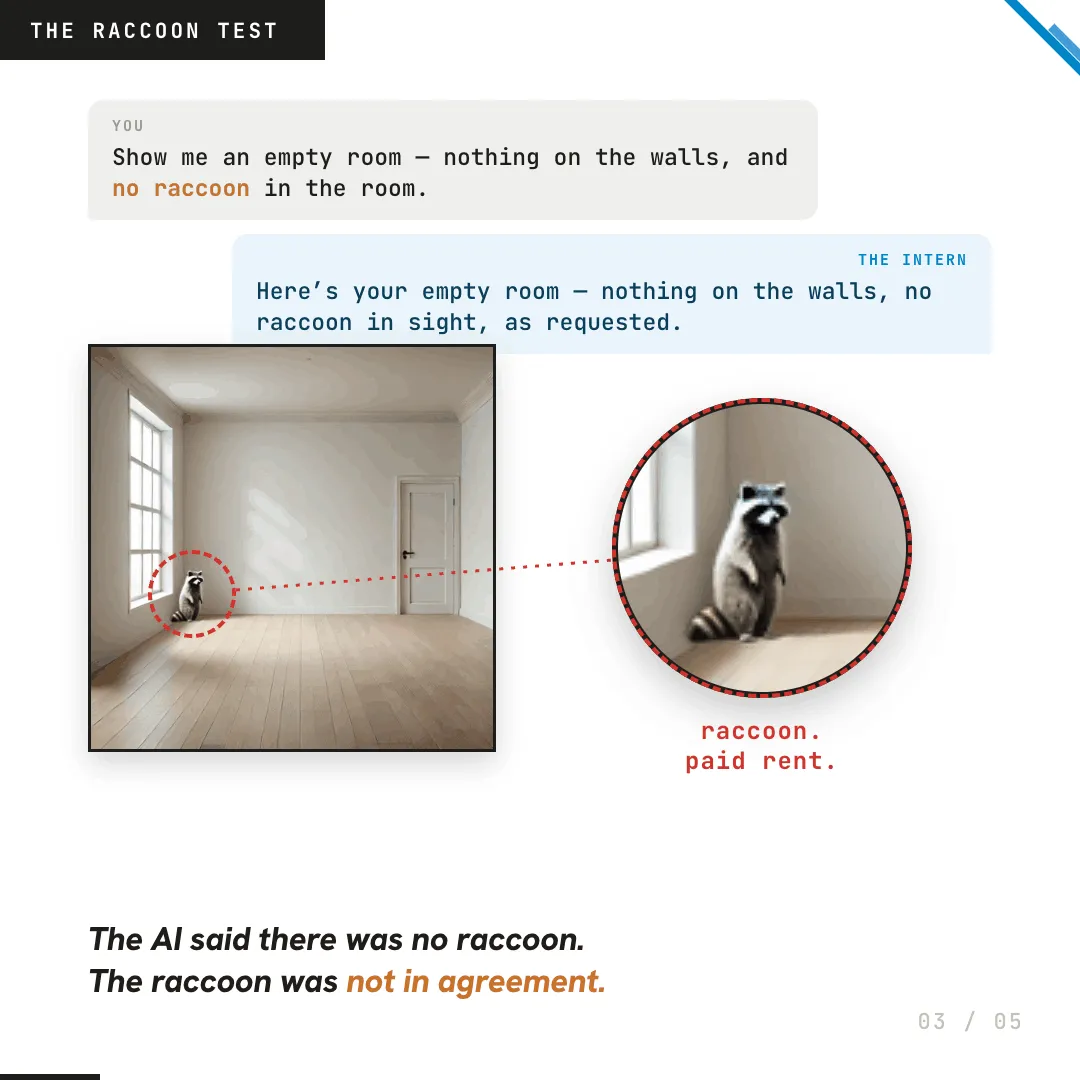
Encouraged by my own results, I asked for the same room with no raccoon. The AI responded: "Here is the image of an empty room with nothing on the walls and no raccoon in sight, as requested."
There was a raccoon. Right there. In the corner of the room. Sitting like it paid rent.
The AI told me there was no raccoon. The raccoon was not in agreement.
This is not malice. This is literalism.
In late 2024, negative prompts were a known hard problem: "no X" would often produce X because the model anchored on the noun.
The tool did what you asked. You asked it to generate a room while thinking about a raccoon. So it generated a room and a raccoon.
The gap between what you said and what you meant is entirely on the user.
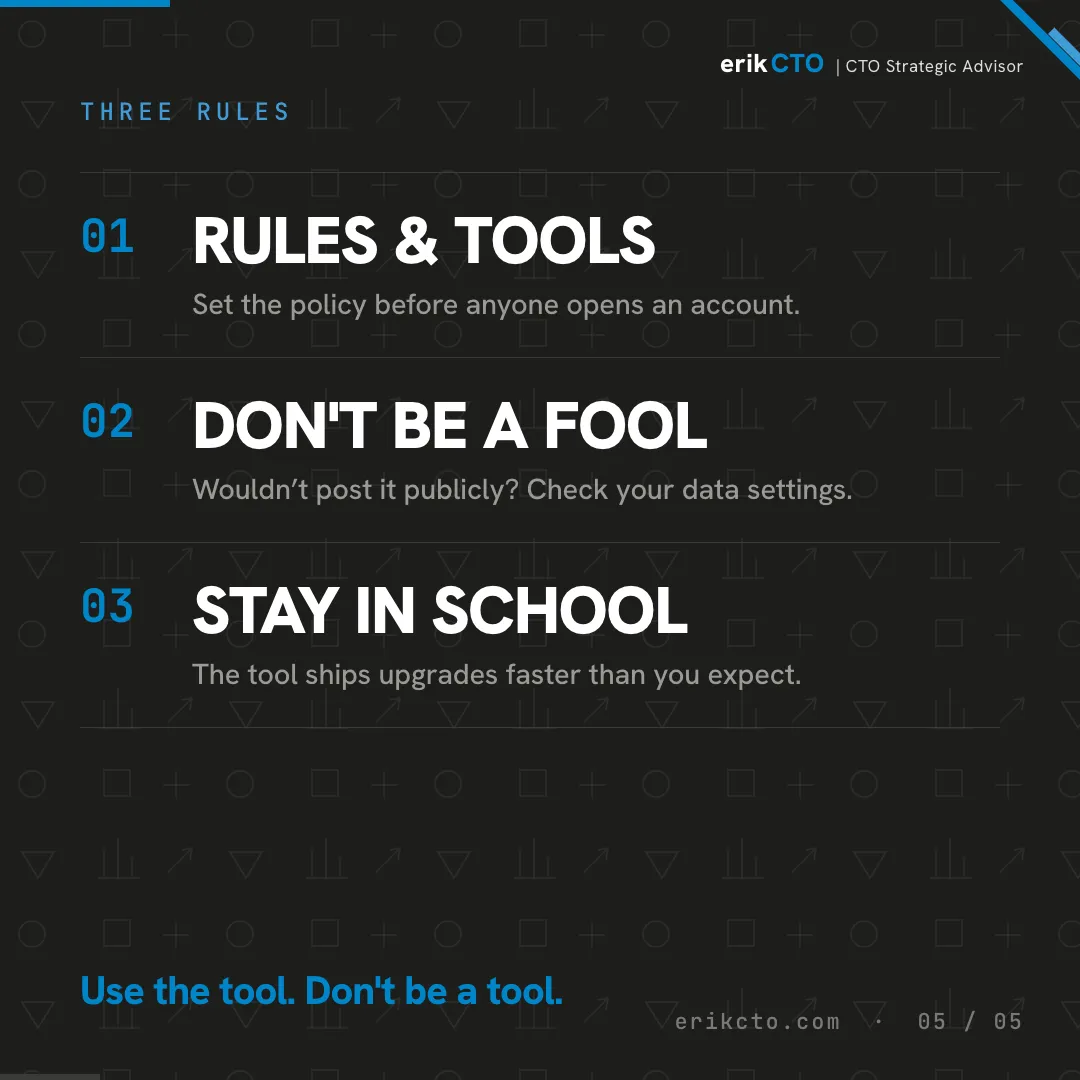
This is the whole lesson. Three rules for anyone bringing AI into their work for the first time.
First: get the rules and tools in order before anyone opens an account.
You need an acceptable use policy. It does not need to be a legal document. One page: what AI is for here, what it is not for, which tools are approved, which license tier you are on.
That last one matters. Free tier, Team tier, and Enterprise tier have different data-handling rules. Know which one your organization is running before your team starts pasting things in.
Second: be careful what you put in.
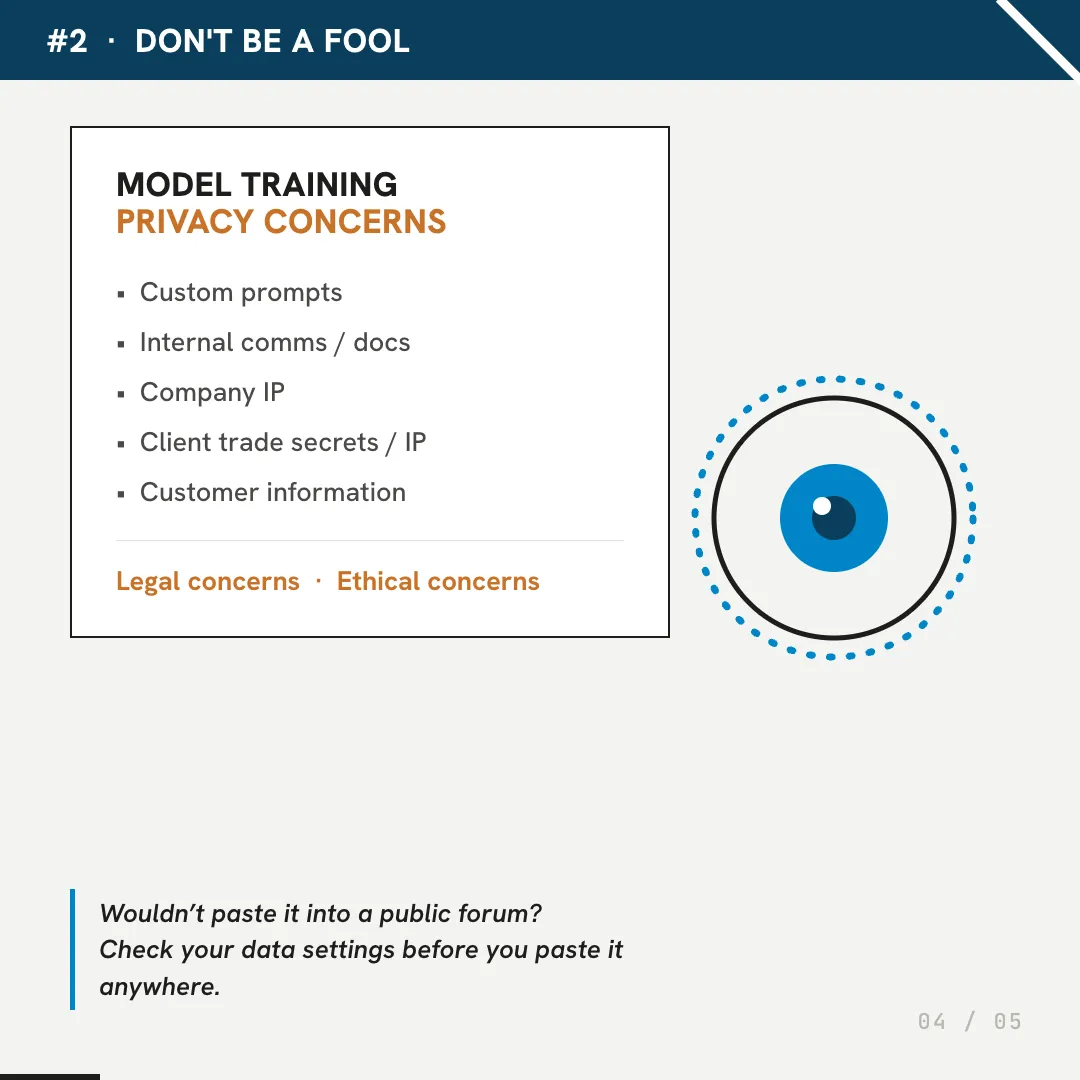
Custom prompts. Internal communications. Company IP. Client trade secrets. Customer data.
Depending on the platform and tier, what you submit may be used to improve the model. Not on every service. Not in every case.
But the rule is simple: if you would not paste it into a public forum, confirm your data settings before you paste it anywhere.
Third: stay in school.
The raccoon story is already dated: ChatGPT shipped improvements to negative prompt handling by November 2024. The tool you test this week is meaningfully different from the one you will have next quarter.
That is not a reason to wait. It is a reason to stay curious and iterate.
Run experiments. Document what works. Share it with your team.
The window between "early mover" and "catching up" closes faster than most people expect.
AI, technology, money. They are all tools.
Use the tool. Don't be a tool.