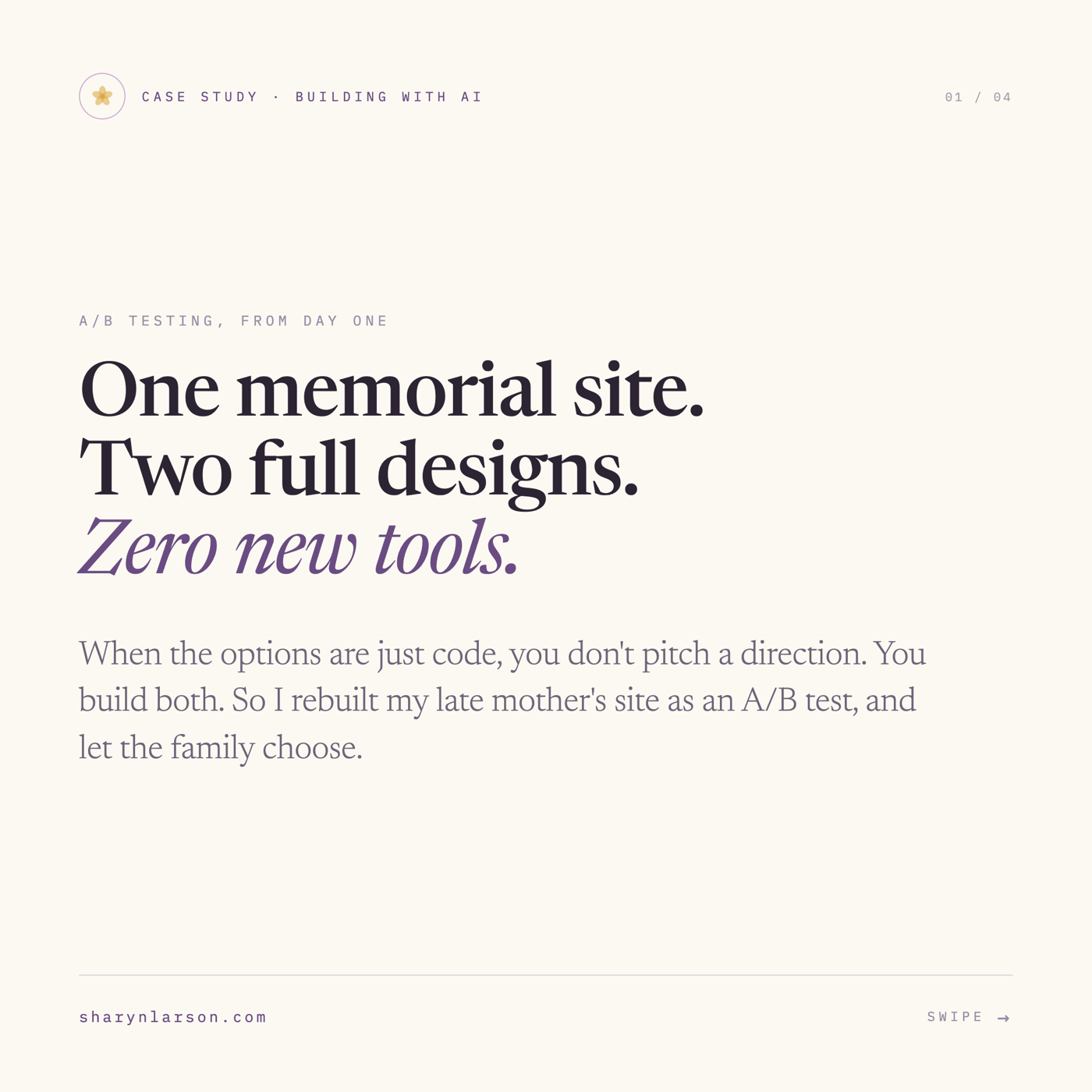
When the options are just code, you don't pitch a direction. You build both.
That was the call with my late mother's memorial site. Not: which design fits better? But: why decide before anyone who matters has seen either option?
When AI is doing the building, the bottleneck shifts. It is not time. It is knowing what to build.
The normal move: choose a direction early, build it, show it.
Efficient, until you realize you spent the whole time advocating for a guess.
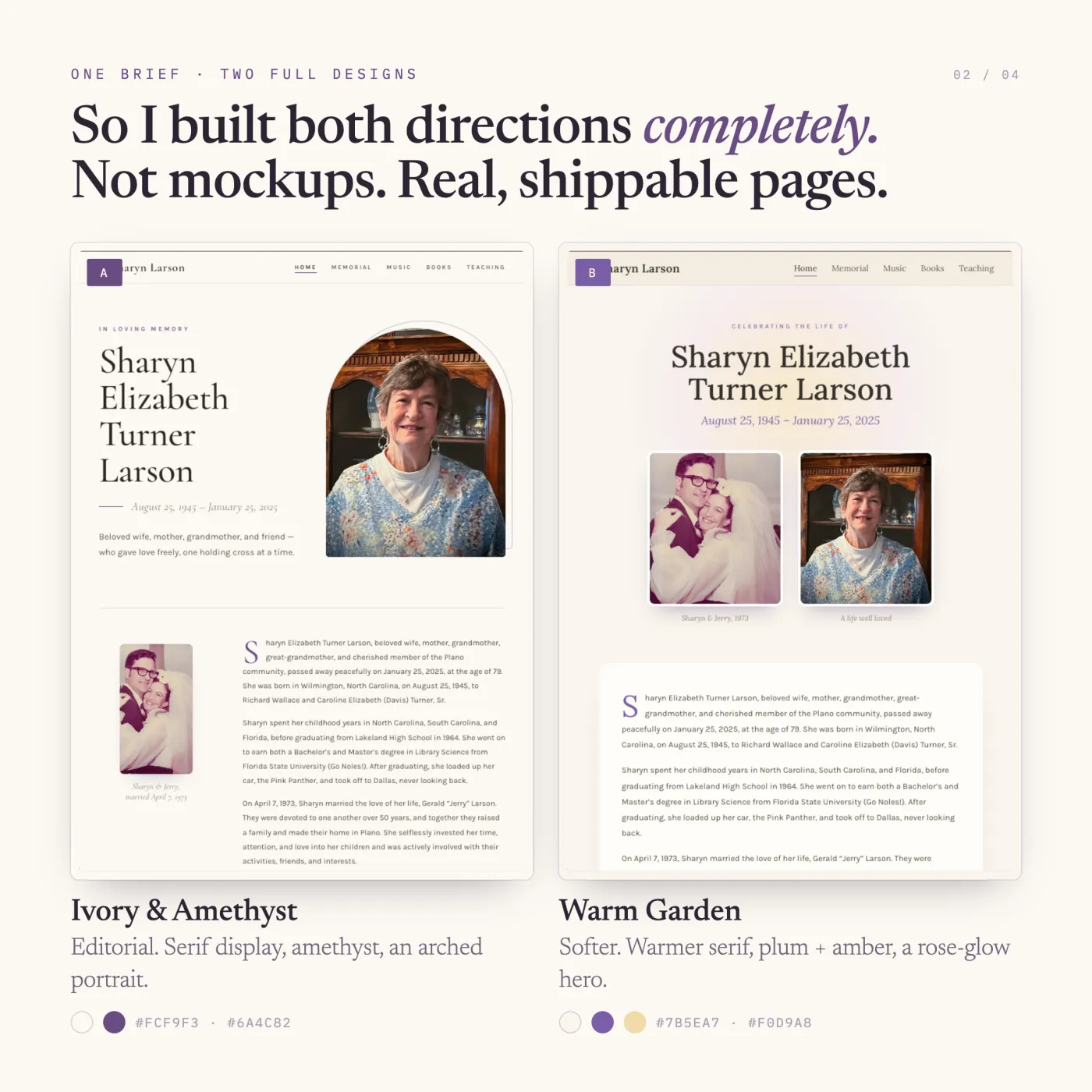
One brief. Two complete designs. Not mockups: real, shippable pages.
Preview A, Ivory and Amethyst: editorial, Cormorant Garamond, amethyst, an arched portrait. Preview B, Warm Garden: softer, Lora, plum and amber, a rose-glow hero.
One session: 3 commits, 24 minutes, 31 files changed.
The original live site's diff: five files, a footer link and a favicon. The production design, layout, and content: untouched.
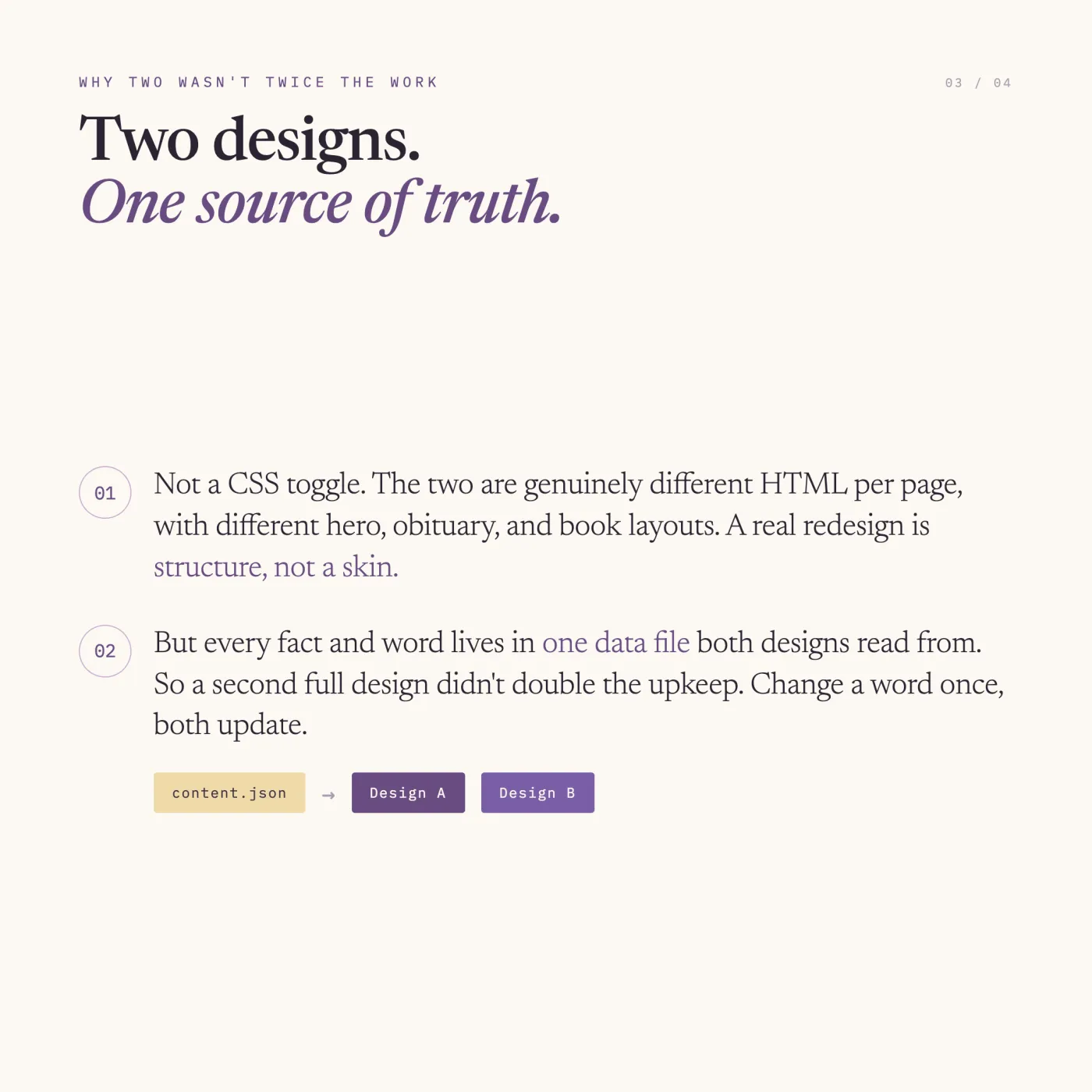
The two variants are genuinely different. Not a CSS toggle. Different HTML per page, different layouts for the hero, the obituary, the books section.
A real redesign is structure, not a skin.
But every fact and word lives in one shared data file both designs read from. Change a word once; both update.
A second full design didn't double the upkeep. It doubled the options without doubling the work.
Both sit behind a near-invisible View A | View B link in the footer. Other visitors see nothing new.
The family opens both, compares at their own pace, and decides.
Real GA event tracking on each variant, tagged by variant, in the same property already live on the site. No new platform.
No new product. Just a quiet link.
Here is the move. Before you present a single design direction to anyone who has to live with the decision, ask whether you could build both instead.
If the answer is yes, build both. Let the people it actually matters to choose.
The next piece covers the brief that made this possible: one prompt, two complete systems, and what I would change.
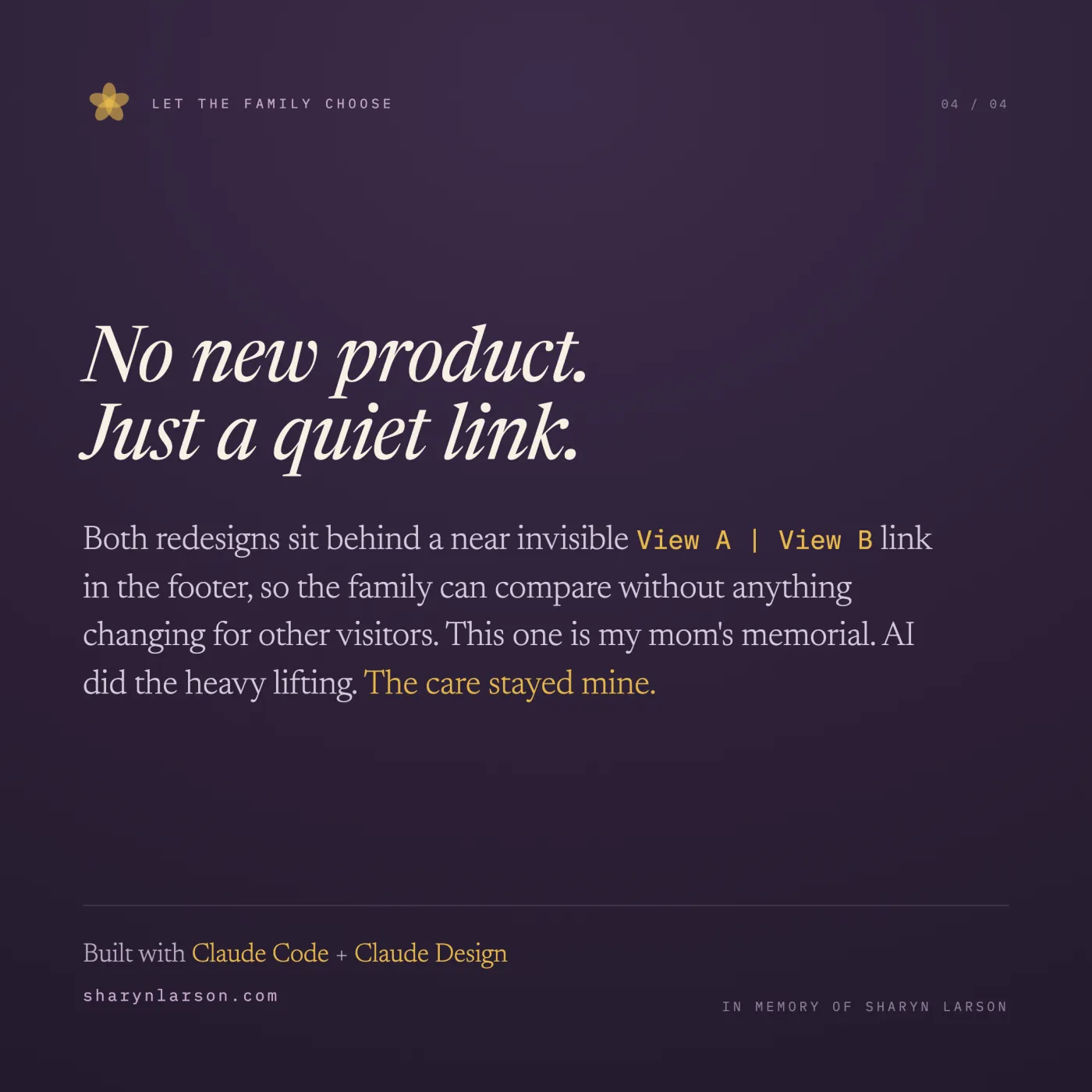
Built with Claude Code + Claude Design. sharynlarson.com · Follow along @erikcto.